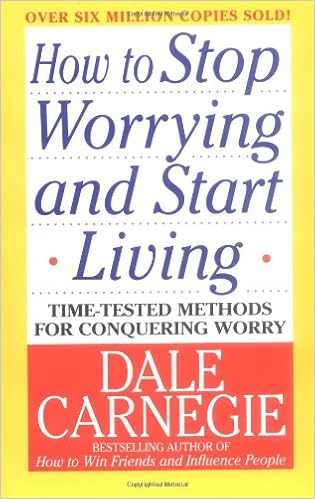
Hi, guys How was your day? I hope your day is kind because if you feel kind of course you'll always attepmt to visit my blog. Now, I'll share the continue of review book that I've read.. In this opportunity, I'll explain based of part 4. So, in part 4 we will be discussed about " Seven Ways to Cultivate A Mental Attitude That Will Bring You Peace and Happiness. " In addition, as usual this part is divided into a few chapters. Therefore, I'll explain each of chapters.
Chapter 12. ( Eight Words That Can Transform Your Life )
In 12 chapter is telling about positive thoughts that got by writers. The writer says that our thoughts make us what we are. Our mental attitude is the X factor that determines our fate. Therefore, think positively is important for us. Thinking positive will appear optimist feeling that useful for our feeling. In additional, there are eight words that explained by the
great philosopher who ruled the Roman Empire, Marcus Aurelius, summed it up in eight
words-eight words that can determine your destiny: "Our life is what our thoughts make
it."
Yes, if we think happy thoughts, we will be happy. If we think miserable thoughts, we will
be miserable. If we think fear thoughts, we will be fearful. If we think sickly thoughts, we
will probably be ill. If we think failure, we will certainly fail. If we wallow in self-pity,
everyone will want to shun us and avoid us. "You are not," said Norman Vincent Peale,
"you are not what you think you are; but what you think, you are."
Am I advocating an habitual Pollyanna attitude toward all our problems? No,
unfortunately, life isn't so simple as all that. But I am advocating that we assume a
positive attitude instead of a negative attitude. In other words, we need to be concerned
about our problems, but not worried.
Chapter 13 ( The High Cost Of Getting Even )
In 13 chapter is talking about never try to get even with our enemies, because if we do we will hurt
ourselves far more than we hurt them. Let's do as General Eisenhower does: let's never
waste a minute thinking about people we don't like. Therefore, based of this chapter is teaching us to don't think too much about others because the successful is in our hand. we have to forward to get better life.
Chapter 14 ( If You Do This, You Will Never Worry About Ingratitude )
"An angry man," said Confucius, "is always full of poison." This man was so full of
poison that I honestly pitied him. He was about sixty years old. Now, life-insurance
companies figure that, on the average, we will live slightly more than two-thirds of the
difference between our present age and eighty. So this man-if he was lucky-probably
had about fourteen or fifteen years to live. Yet he had already wasted almost one of his
few remaining years by his bitterness and resentment over an event that was past and
gone. I pitied him.
Instead of wallowing in resentment and self-pity, he might have asked himself why he
didn't get any appreciation. Maybe he had underpaid and overworked his employees.
Maybe they considered a Christmas bonus not a gift, but something they had earned.
Maybe he was so critical and unapproachable that no one dared or cared to thank him.
Maybe they felt he gave the bonus because most of the profits were going for taxes,
anyway.
On the other hand, maybe the employees were selfish, mean, and ill-mannered. Maybe
this. Maybe that. I don't know any more about it than you do. But I do know what Dr.
Samuel Johnson said: "Gratitude is a fruit of great cultivation. You do not find it among
gross people."
Here is the point I am trying to make: this man made the human and distressing mistake
of expecting gratitude. He just didn't know human nature.
If you saved a man's life, would you expect him to be grateful? You might-but Samuel
Leibowitz, who was a famous criminal lawyer before he became a judge, saved seventyeight
men from going to the electric chair! How many of these men, do you suppose,
stopped to thank Samuel Leibowitz, or ever took the trouble to send him a Christmas
card? How many? Guess. ... That's right-none.
Christ healed ten lepers in one afternoon-but how many of those lepers even stopped to
thank Him? Only one. Look it up in Saint Luke. When Christ turned around to His
disciples and asked: "Where are the other nine?" they had all run away. Disappeared
without thanks! Let me ask you a question: Why should you and I-or this business man
in Texas-expect more thanks for our small favours than was given Jesus Christ?
And when it comes to money matters! Well, that is even more hopeless. Charles
Schwab told me that he had once saved a bank cashier who had speculated in the stock
market with funds belonging to the bank. Schwab put up the money to save this man
from going to the penitentiary. Was the cashier grateful? Oh, yes, for a little while. Then
he turned against Schwab and reviled him and denounced him-the very man who had
kept him out of jail!
Chapter 15 ( Would You Take A Million Dollars For What You Have? )
I have known Harold Abbott for years. He lives at 820 South Madison Avenue, Webb
City, Missouri. He used to be my lecture manager. One day he and I met in Kansas City
and he drove me down to my farm at Belton, Missouri. During that drive, I asked him
how he kept from worrying; and he told me an inspiring story that I shall never forget.
"I used to worry a lot," he said, "but one spring day in 1934, I was walking down West
Dougherty Street in Webb City when I saw a sight that banished all my worries. It all
happened in ten seconds, but during those ten seconds I learned more about how to live
than I had learned in the previous ten years. For two years I had been running a grocery
store in Webb City," Harold Abbott said, as he told me the story. "I had not only lost all
my savings, but I had incurred debts that took me seven years to pay back. My grocery
store had been closed the previous Saturday; and now I was going to the Merchants
and Miners Bank to borrow money so I could go to Kansas City to look for a job.
I walked like a beaten man. I had lost all my fight and faith. Then suddenly I saw coming
down the street a man who had no legs. He was sitting on a little wooden platform
equipped with wheels from roller skates. He propelled himself along the street with a
block of wood in each hand. I met him just after he had crossed the street and was
starting to lift himself up a few inches over the kerb to the sidewalk. As he tilted his little
wooden platform to an angle, his eyes met mine. He greeted me with a grand smile.
'Good morning, sir. It is a fine morning, isn't it?' he said with spirit. As I stood looking at
him, I realised how rich I was. I had two legs. I could walk. I felt ashamed of my self-pity.
I said to myself if he can be happy, cheerful, and confident without legs, I certainly can
with legs. I could already feel my chest lifting. I had intended to ask the Merchants and
Miners Bank for only one hundred dollars. But now I had courage to ask for two
hundred. I had intended to say that I wanted to go to Kansas City to try to get a job. But
now I announced confidently that I wanted to go to Kansas City to get a job. I got the
loan; and I got the job.I have known Harold Abbott for years. He lives at 820 South Madison Avenue, Webb
City, Missouri. He used to be my lecture manager. One day he and I met in Kansas City
and he drove me down to my farm at Belton, Missouri. During that drive, I asked him
how he kept from worrying; and he told me an inspiring story that I shall never forget.
"I used to worry a lot," he said, "but one spring day in 1934, I was walking down West
Dougherty Street in Webb City when I saw a sight that banished all my worries. It all
happened in ten seconds, but during those ten seconds I learned more about how to live
than I had learned in the previous ten years. For two years I had been running a grocery
store in Webb City," Harold Abbott said, as he told me the story. "I had not only lost all
my savings, but I had incurred debts that took me seven years to pay back. My grocery
store had been closed the previous Saturday; and now I was going to the Merchants
and Miners Bank to borrow money so I could go to Kansas City to look for a job.
I walked like a beaten man. I had lost all my fight and faith. Then suddenly I saw coming
down the street a man who had no legs. He was sitting on a little wooden platform
equipped with wheels from roller skates. He propelled himself along the street with a
block of wood in each hand. I met him just after he had crossed the street and was
starting to lift himself up a few inches over the kerb to the sidewalk. As he tilted his little
wooden platform to an angle, his eyes met mine. He greeted me with a grand smile.
'Good morning, sir. It is a fine morning, isn't it?' he said with spirit. As I stood looking at
him, I realised how rich I was. I had two legs. I could walk. I felt ashamed of my self-pity.
I said to myself if he can be happy, cheerful, and confident without legs, I certainly can
with legs. I could already feel my chest lifting. I had intended to ask the Merchants and
Miners Bank for only one hundred dollars. But now I had courage to ask for two
hundred. I had intended to say that I wanted to go to Kansas City to try to get a job. But
now I announced confidently that I wanted to go to Kansas City to get a job. I got the
loan; and I got the job.
Chapter 16 ( Find Yourself And Be Yourself: Remember There Is No One Else on Earth
Like You )
I have a letter from Mrs. Edith Allred, of Mount Airy, North Carolina: "As a child, I was
extremely sensitive and shy," she says in her letter. "I was always overweight and my
cheeks made me look even fatter than I was. I had an old-fashioned mother who
thought it was foolish to make clothes look pretty. She always said: 'Wide will wear while
narrow will tear'; and she dressed me accordingly. I never went to parties; never had
any fun; and when I went to school, I never joined the other children in outside activities,
not even athletics. I was morbidly shy. I felt I was 'different' from everybody else, and
entirely undesirable.
"When I grew up, I married a man who was several years my senior. But I didn't change.
My in-laws were a poised and self-confident family. They were everything I should have
been but simply was not. I tried my best to be like them, but I couldn't. Every attempt
they made to draw me out of myself only drove me further into my shell. I became
nervous and irritable. I avoided all friends. I got so bad I even dreaded the sound of the
doorbell ringing! I was a failure. I knew it; and I was afraid my husband would find it out.
So, whenever we were in public, I tried to be gay, and overacted my part. I knew I
overacted; and I would be miserable for days afterwards. At last I became so unhappy
that I could see no point in prolonging my existence. I began to think of suicide."
What happened to change this unhappy woman's life? Just a chance remark!
"A chance remark," Mrs. Allred continued, "transformed my whole life. My mother-in-law
was talking one day of how she brought her children up, and she said: 'No matter what
happened, I always insisted on their being themselves.' ... 'On being themselves.' ...
That remark is what did it! In a flash, I realised I had brought all this misery on myself by
trying to fit myself into a pattern to which I did not conform.
"I changed overnight! I started being myself. I tried to make a study of my own
personality. Tried to find out what I was. I studied my strong points. I learned all I could
about colours and styles, and dressed in a way that I felt was becoming to me. I reached
out to make friends. I joined an organisation-a small one at first-and was petrified with
fright when they put me on a programme. But each time I spoke, I gained a little
courage. It took a long while-but today I have more happiness than I ever dreamed
possible. In rearing my own children, I have always taught them the lesson I had to learn
from such bitter experience: No matter what happens, always be yourself!"
This problem of being willing to be yourself is "as old as history," says Dr. James
Gordon Gilkey, "and as universal as human life." This problem of being unwilling to be
yourself is the hidden spring behind many neuroses and psychoses and complexes.
Angelo Patri has written thirteen books and thousands of syndicated newspaper articlesI have a letter from Mrs. Edith Allred, of Mount Airy, North Carolina: "As a child, I was
extremely sensitive and shy," she says in her letter. "I was always overweight and my
cheeks made me look even fatter than I was. I had an old-fashioned mother who
thought it was foolish to make clothes look pretty. She always said: 'Wide will wear while
narrow will tear'; and she dressed me accordingly. I never went to parties; never had
any fun; and when I went to school, I never joined the other children in outside activities,
not even athletics. I was morbidly shy. I felt I was 'different' from everybody else, and
entirely undesirable.
"When I grew up, I married a man who was several years my senior. But I didn't change.
My in-laws were a poised and self-confident family. They were everything I should have
been but simply was not. I tried my best to be like them, but I couldn't. Every attempt
they made to draw me out of myself only drove me further into my shell. I became
nervous and irritable. I avoided all friends. I got so bad I even dreaded the sound of the
doorbell ringing! I was a failure. I knew it; and I was afraid my husband would find it out.
So, whenever we were in public, I tried to be gay, and overacted my part. I knew I
overacted; and I would be miserable for days afterwards. At last I became so unhappy
that I could see no point in prolonging my existence. I began to think of suicide."
What happened to change this unhappy woman's life? Just a chance remark!
"A chance remark," Mrs. Allred continued, "transformed my whole life. My mother-in-law
was talking one day of how she brought her children up, and she said: 'No matter what
happened, I always insisted on their being themselves.' ... 'On being themselves.' ...
That remark is what did it! In a flash, I realised I had brought all this misery on myself by
trying to fit myself into a pattern to which I did not conform.
"I changed overnight! I started being myself. I tried to make a study of my own
personality. Tried to find out what I was. I studied my strong points. I learned all I could
about colours and styles, and dressed in a way that I felt was becoming to me. I reached
out to make friends. I joined an organisation-a small one at first-and was petrified with
fright when they put me on a programme. But each time I spoke, I gained a little
courage. It took a long while-but today I have more happiness than I ever dreamed
possible. In rearing my own children, I have always taught them the lesson I had to learn
from such bitter experience: No matter what happens, always be yourself!"
This problem of being willing to be yourself is "as old as history," says Dr. James
Gordon Gilkey, "and as universal as human life." This problem of being unwilling to be
yourself is the hidden spring behind many neuroses and psychoses and complexes.
Angelo Patri has written thirteen books and thousands of syndicated newspaper articles von the subject of child training, and he says: "Nobody is so miserable as he who longs to
be somebody and something other than the person he is in body and mind."
Chapter 17 ( If You Have A Lemon, Make A Lemonade )
I dropped in one day at the University of Chicago and asked the
Chancellor, Robert Maynard Hutchins, how he kept from worrying. He replied: "I have
always tried to follow a bit of advice given me by the late Julius Rosenwald, President of
Sears, Roebuck and Company: 'When you have a lemon, make lemonade.' "
That is what a great educator does. But the fool does the exact opposite. If he finds that
life has handed him a lemon, he gives up and says: "I'm beaten. It is fate. I haven't got a
chance." Then he proceeds to rail against the world and indulge in an orgy of self-pity.
But when the wise man is handed a lemon, he says: "What lesson can I learn from this
misfortune? How can I improve my situation? How can I turn this lemon into a
lemonade?"
After spending a lifetime studying people and their hidden reserves of power, the great
psychologist, Alfred Adler, declared that one of the wonder-filled characteristics of
human beings is "their power to turn a minus into a plus."
Here is an interesting and stimulating story of a woman I know who did just that. Her
name is Thelma Thompson, and she lives at 100 Morningside Drive, New York City.
"During the war," she said, as she told me of her experience, "during the war, my
husband was stationed at an Army training camp near the Mojave Desert, in New
Mexico. I went to live there in order to be near him. I hated the place. I loathed it. I had
never before been so miserable. My husband was ordered out on maneuvers in the
Mojave Desert, and I was left in a tiny shack alone. The heat was unbearable-125
degrees in the shade of a cactus. Not a soul to talk to but Mexicans and Indians, and
they couldn't speak English. The wind blew incessantly, and all the food I ate, and the
very air I breathed, were filled with sand, sand, sand!
"I was so utterly wretched, so sorry for myself, that I wrote to my parents. I told them I
was giving up and coming back home. I said I couldn't stand it one minute longer. I
would rather be in jail! My father answered my letter with just two lines-two lines that will
always sing in my memory-two lines that completely altered my life:
Two men looked out from prison bars,
One saw the mud, the other saw stars.
"I read those two lines over and over. I was ashamed of myself. I made up my mind I
would find out what was good in my present situation. I would look for the stars. I dropped in one day at the University of Chicago and asked the
Chancellor, Robert Maynard Hutchins, how he kept from worrying. He replied: "I have
always tried to follow a bit of advice given me by the late Julius Rosenwald, President of
Sears, Roebuck and Company: 'When you have a lemon, make lemonade.' "
That is what a great educator does. But the fool does the exact opposite. If he finds that
life has handed him a lemon, he gives up and says: "I'm beaten. It is fate. I haven't got a
chance." Then he proceeds to rail against the world and indulge in an orgy of self-pity.
But when the wise man is handed a lemon, he says: "What lesson can I learn from this
misfortune? How can I improve my situation? How can I turn this lemon into a
lemonade?"
After spending a lifetime studying people and their hidden reserves of power, the great
psychologist, Alfred Adler, declared that one of the wonder-filled characteristics of
human beings is "their power to turn a minus into a plus."
Here is an interesting and stimulating story of a woman I know who did just that. Her
name is Thelma Thompson, and she lives at 100 Morningside Drive, New York City.
"During the war," she said, as she told me of her experience, "during the war, my
husband was stationed at an Army training camp near the Mojave Desert, in New
Mexico. I went to live there in order to be near him. I hated the place. I loathed it. I had
never before been so miserable. My husband was ordered out on maneuvers in the
Mojave Desert, and I was left in a tiny shack alone. The heat was unbearable-125
degrees in the shade of a cactus. Not a soul to talk to but Mexicans and Indians, and
they couldn't speak English. The wind blew incessantly, and all the food I ate, and the
very air I breathed, were filled with sand, sand, sand!
"I was so utterly wretched, so sorry for myself, that I wrote to my parents. I told them I
was giving up and coming back home. I said I couldn't stand it one minute longer. I
would rather be in jail! My father answered my letter with just two lines-two lines that will
always sing in my memory-two lines that completely altered my life:
Two men looked out from prison bars,
One saw the mud, the other saw stars.
"I read those two lines over and over. I was ashamed of myself. I made up my mind I
would find out what was good in my present situation. I would look for the stars.
Chapter 18 ( How To Cure Melancholy In Fourteen Days )
When I started writing this book, I offered a two-hundred-dollar prize for the most helpful
and inspiring true story on "How I Conquered Worry".
The three judges for this contest were: Eddie Rickenbacker, president, Eastern Air
Lines; Dr. Stewart W. McClelland, president, Lincoln Memorial University; H. V.
Kaltenborn, radio news analyst. However, we received two stories so superb that the
judges found it impossible to choose between them. So we divided the prize. Here is
one of the stories that tied for first prize-the story of C.R. Burton (who works for Whizzer
Motor Sales of Missouri, Inc.), 1067 Commercial Street, Springfield, Missouri.
"I lost my mother when I was nine years old, and my father when I was twelve," Mr.
Burton wrote me. "My father was killed, but my mother simply walked out of the house
one day nineteen years ago; and I have never seen her since. Neither have I ever seen
my two little sisters that she took with her. She never even wrote me a letter until after
she had been gone seven years. My father was killed in an accident three years after Mother left. He and a partner bought a cafe in a small Missouri town; and while Father
was away on a business trip, his partner sold the cafe for cash and skipped out. A friend
wired Father to hurry back home; and in his hurry, Father was killed in a car accident at
Salinas, Kansas. Two of my father's sisters, who were poor and old and sick took three
of the children into their homes. Nobody wanted me and my little brother. We were left
at the mercy of the town. We were haunted by the fear of being called orphans and
treated as orphans. Our fears soon materialised, too.
I lived for a little while with a poor family in town. But times were hard and the head of
the family lost his job, so they couldn't afford to feed me any longer. Then Mr. and Mrs.
Loftin took me to live with them on their farm eleven miles from town. Mr. Loftin was
seventy years old, and sick in bed with shingles. He told me I could stay there 'as long
as I didn't lie, didn't steal, and did as I was told'. Those three orders became my Bible. I
lived by them strictly. I started to school, but the first week found me at home, bawling
like a baby. The other children picked on me and poked fun at my big nose and said I
was dumb and called me an 'orphan brat'. I was hurt so badly that I wanted to fight
them; but Mr. Loftin, the farmer who had taken me in, said to me: 'Always remember that
it takes a bigger man to walk away from a fight than it does to stay and fight.' I didn't
fight until one day a kid picked up some chicken manure from the schoolhouse yard and
threw it in my face. I beat the hell out of him; and made a couple of friends. They said he
had it coming to him.
"I was proud of a new cap that Mrs. Loftin had bought me. One day one of the big girls
jerked it off my head and filled it with water and ruined it. She said she filled it with water
so that 'the water would wet my thick skull and keep my popcorn brains from popping'.
"I never cried at school, but I used to bawl it out at home. Then one day Mrs. Loftin gave
me some advice that did away with all troubles and worries and turned my enemies into
friends. She said: 'Ralph, they won't tease you and call you an "orphan brat" any more if
you will get interested in them and see how much you can do for them.' I took her
advice. I studied hard; and I soon headed the class. I was never envied because I went
out of my way to help them.
OK, That's old an explanation of me. I'm sorry if there are many mistake of me. Please don't forget to leave your comment because your comment is really useful for me and I know my mistake as well.
- Thank You -
 Chapter 29: The Major Decision Of Tour Life