Hello guys. how are you? I hope in this situation you are good and health always come to you. ok, currently I'll continue my routine activity. In this time, I'll share to you a review of last book but right now I'll focus on part 8. What's on part 8? Are you curious about this? Ok, I'll give an explanation of part 8 below this.
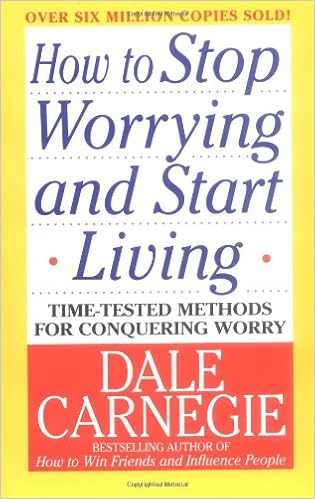 Chapter 29: The Major Decision Of Tour Life
This chapter is addressed to young men and women who haven't yet found the work they want to do. If you are in that category, reading this chapter may have a profound effect upon the remainder of your life. If you are under eighteen, you will probably soon be called upon to make the two most important decisions of your life- decisions that will profoundly alter all the days of your years: decisions that may have far-reaching effects upon your happiness, your income, your health; decisions that may make or break you.
What are these two tremendous decisions? First: How are you going to make a living? Are you going to be a farmer, a mail carrier, a chemist, a forest ranger, a stenographer, a horse dealer, a college professor, or are you going to run a hamburger stand ? Second: Whom are you going to select to be the father or mother of your children? Both of those great decisions are frequently gambles. "Every boy," says Harry Emerson Fosdick in his book, The Power to See It Through, "every boy is a gambler when he chooses a vocation. He must stake his life on it." How can you reduce the gamble in selecting a vocation? Read on; we will tell you as best we can. First, try, if possible, to find work that you enjoy. I once asked David M. Goodrich, Chairman of the Board, B. F. Goodrich Company-tyre manufacturers-what he considered the first requisite of success in business, and he replied: "Having a good time at your work. If you enjoy what you are doing," he said, "you may work long hours, but it won't seem like work at all. It will seem like play." Edison was a good example of that. Edison-the unschooled newsboy who grew up to transform the industrial life of America-Edison, the man who often ate and slept in his laboratory and toiled there for eighteen hours a day. But it wasn't toil to him. "I never did a day's work in my life," he exclaimed. "It was all fun."
Chapter 30 : "Seventy Per Cent Of All Our Worries "
If I knew how to solve everybody's financial worries, I wouldn't be writing this book, I would be sitting in the White House-right beside the President. But here is one thing I can do: I can quote some authorities on this subject and make some highly practical suggestions and point out where you can obtain books and pamphlets that will give you additional guidance. Seventy per cent of all our worries, according to a survey made by the Ladies' Home Journal, are about money. George Gallup, of the Gallup Poll, says that his research indicates that most people believe that they would have no more financial worries if they could increase their income by only ten per cent. That is true in many cases, but in a surprisingly large number of cases it is not true. For example, while writing this chapter, I interviewed an expert on budgets: Mrs. Elsie Stapleton-a woman who spent years as financial adviser to the customers and employees of Wanamaker's Department Store in New York and of Gimbel's. She has spent additional years as an individual consultant, trying to help people who were frantic with worry about money. She has helped people in all kinds of income brackets, all the way from a porter who earned less than a thousand dollars a year to an executive earning one hundred thousand dollars a year. And this is what she told me: "More money is not the answer to most people's financial worries. In fact, I have often seen it happen that an increase in income accomplished nothing but an increase in spending-and an increase in headaches. What causes most people to worry," she said, "is not that they haven't enough money, but that they don't know how to spend the money they have!" ... [You snorted at that last sentence, didn't you? Well, before you snort again, please remember that Mrs. Stapleton did not say that was true of all people. She said: "most people". She didn't mean you. She meant your sisters and your cousins, whom you reckon by the dozens.] A lot of readers are going to say: "I wish this guy Carnegie had my bills to meet, my obligations to keep up-on my weekly salary. If he did, I'll bet he would change his tune." Well, I have had my financial troubles: I have worked ten hours a day at hard physical labour in the cornfields and hay barns of Missouri-worked until my one supreme wish was to be free from the aching pains of utter physical exhaustion. I was paid for that grueling work not a dollar an hour, nor fifty cents, nor even ten cents. I was paid five cents an hour for a ten-hour day. I know what it means to live for twenty years in houses without a bathroom or running water. I know what it means to sleep in bedrooms where the temperature is fifteen degrees below zero. I know what it means to walk miles to save a nickel car-fare and have holes in the bottom of my shoes and patches on the seat of my pants. I know what it means to order the cheapest dish on a restaurant menu, and to sleep with my trousers under the mattress because I couldn't afford to have them pressed by a tailor. Yet, even during those times, I usually managed to save a few dimes and quarters out of my income because I was afraid not to. As a result of this experience, I realised that if you and I long to avoid debt and financial worries, then we have to do what a business firm does: we have to have a plan for spending our money and spend according to that plan. But most of us don't do that. For example, my good friend, Leon Shimkin, general manager of the firm that publishes this book, pointed out to me a curious blindness that many people have in regard to their money. He told me about a book-keeper he knows, a man who is a wizard at figures when working for his firm-yet when it comes to handling his personal finances! ... Well, if this man gets paid on Friday noon, let us say, he will walk down the street, see an overcoat in a store window that strikes his fancy, and buy it-never giving a thought to the fact that rent, electric lights, and all kinds of "fixed" charges have to come out of that pay envelope sooner or later. No-he has the cash in his pocket, and that's all that counts. Yet this man knows that if the company he works for conducted its business in such a slap-happy manner, it would end up in bankruptcy. Here's something to consider-where your money is concerned, you're in business for yourself! And it is literally "your business" what you do with your money.
But what are the principles of managing our money? How do we begin to make a budget and a plan? Here are eleven rules.
Rule No. 1: Get the facts down on paper.
Rule No. 2: Get a tailor-made budget that really fits your needs.
Rule No. 3: Learn how to spend wisely.
Rule No. 4: Don't increase your headaches with your income.
Rule No. 5: Try to build credit, in the event you must borrow.
Rule No. 7: Do not have your life-insurance proceeds paid to your widow in cash.
Rule No. 8: Teach your children a responsible attitude toward money.
Rule No. 9: II necessary, make a little extra money off your kitchen stove.
Rule No. 10: Don't gamble-ever.
Rule No. 11: If we can't possibly improve our financial situation, let's be good to ourselves and stop
resenting what can't be changed.
Well, those all about the explanation of my review, thanks for being loyal to visit my blog, thank you so much and see you.


Good article
ReplyDelete